

The Record · Document
The Taxpayer Smoke Shop: How California Funds Pipes and Needles Instead of Recovery
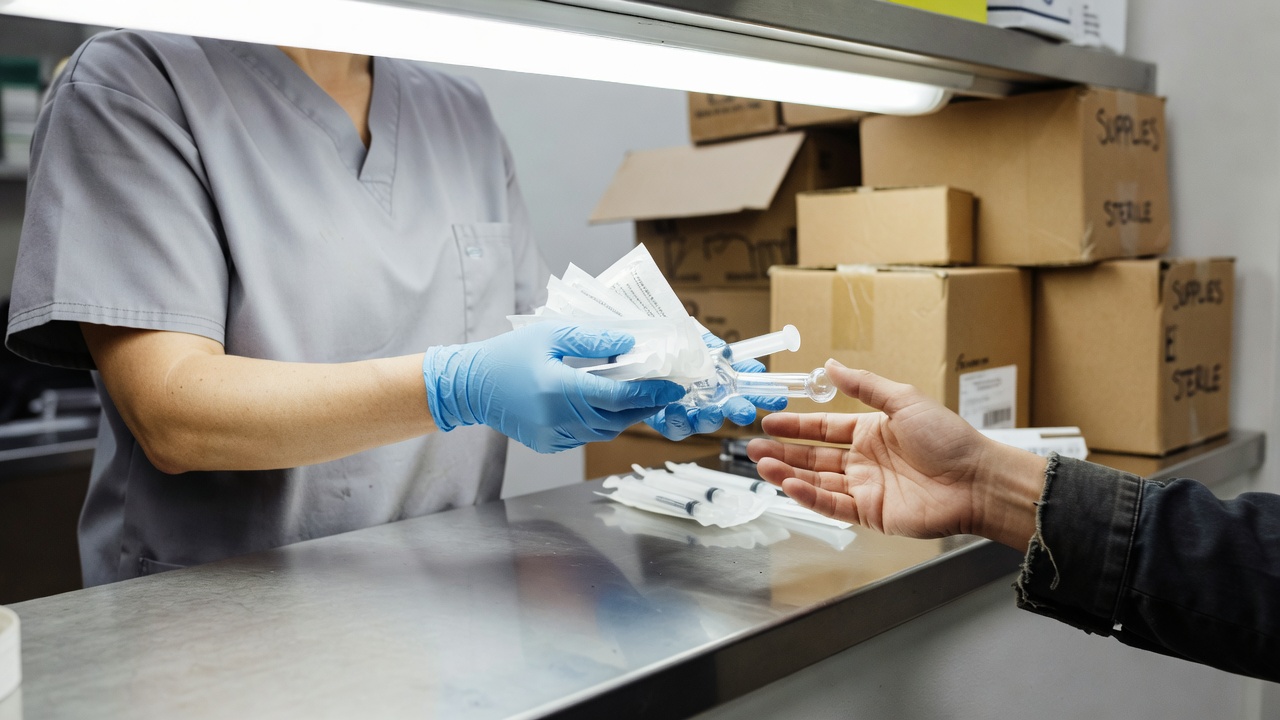
The State of California is now one of the largest suppliers of drug paraphernalia in the country — and you are paying for it. Every figure below comes directly from a government budget document, statute, or state public-health report. No news articles. No advocacy blogs. Just the government's own paperwork.
1. Yes, the State Really Hands Out Meth and Fentanyl Pipes
In 2018, the Legislature amended Health and Safety Code §121349.1 to expand what "syringe services programs" (SSPs) may legally hand out — beyond needles, to any materials a state or local health department deems necessary.[3] In 2020, the California Department of Public Health (CDPH) published an official Issue Brief encouraging these programs to distribute "safer smoking supplies" — pipes — to drug users.[3] Authorized programs gained access to free smoking supplies through CDPH beginning in January 2020.[4]
CDPH's own 2026 legal fact sheet confirms that state law now shields the distribution and possession of this equipment from prosecution when it flows through an authorized program.[5]
2. The Numbers Are Exploding
CDPH's own program report, California Syringe Services 2016–2024, documents the growth:
| Metric (CDPH data) | Figure |
|---|---|
| Smoking supplies, 2021 | 89,424 |
| Smoking supplies, 2024 | 786,304 — a 779.3% increase in three years |
| Syringes distributed, 2019 | 23,700,592 |
| Syringes distributed, 2020 | 25,802,702 |
Read that again: while syringe purchases grew 16%, pipe and smoking-kit distribution grew nearly 780%.[1] The state didn't just tolerate this shift — it engineered it, with CDPH publishing guidance urging programs to add smoking supplies to their inventory.[3]
3. Who Pays? You Do
Follow the money through the government's own budget documents:
- The Budget Act of 2019 (AB 74, Ch. 23, Statutes of 2019) committed $15.2 million in state funds to prop up syringe services programs statewide — the largest government investment in "harm reduction" in California history.[6]
- SB 159 (Ch. 40, Statutes of 2024, Sec. 83) authorized CDPH to spend up to $23 million in public ADAP Rebate Fund money on program "enhancements," including the Harm Reduction Supply Clearinghouse — budgeted at $10 million in FY 2024–25 and $10 million in FY 2025–26 — the warehouse that stocks these giveaway programs.[2]
- CDPH's 2026–27 estimate admits the program spent only $1.6 million of its first $10 million in FY 2024–25 — and instead of returning the unspent $8.4 million to taxpayers, the state simply rolled it forward to keep the pipeline stocked in future years.[7]
- Local government money too: the San Francisco Department of Public Health directly funds the San Francisco AIDS Foundation to run syringe access, which subcontracts to Glide, the Homeless Youth Alliance, St. James Infirmary, and the "San Francisco Drug Users' Union."[8]
- Federal money is in the mix: the state Department of Health Care Services confirms that federal Substance Use Block Grant (SUBG) dollars flow to county-funded SSPs, which are steered toward the state Clearinghouse for supplies.[9]
4. What Does This Cost in 2025? Our Estimate
Government reporting is fragmented across state, county, and federal budgets — by design or by neglect. Using only documented figures, here is a conservative floor:
| Component | Documented annual amount |
|---|---|
| State Harm Reduction Supply Clearinghouse (FY 2025–26 budgeted) | $10.0 million[2] |
| State staffing/support grants to SSPs (Budget Act of 2019 program, annualized over three years) | ~$5.0 million[6] |
| County/city contracts (e.g., SFDPH→SFAF and subcontractors) and federal SUBG pass-throughs | Millions more — not consolidated in any single public report[8],[9] |
Conservative estimate: California taxpayers are on the hook for at least $15 million per year in state money alone, before county contracts and federal pass-throughs — plausibly well over $20 million all-in.
Our methodology: This estimate uses only figures published in the government documents cited below. Because no agency publishes a consolidated total, the true all-funds number is likely higher. We call on the Legislative Analyst's Office and county auditors to publish a full accounting.
5. The Bigger Picture: Billions Spent, Outcomes Untracked
The paraphernalia budget is a small line in a far larger story. California has poured extraordinary sums into homelessness and addiction and cannot show taxpayers what the money bought. The California State Auditor reported in April 2024 that the state allocated roughly $24 billion over five years (fiscal years 2018–19 through 2022–23) across homelessness and housing programs — and found that the state has not consistently tracked the outcomes or cost-effectiveness of that spending.[10] The Legislative Analyst's Office separately counts more than $20.6 billion in one-time and temporary state augmentations for housing and homelessness since 2018–19.[11]
Against that backdrop, spending millions more to keep drug users supplied with fresh pipes is not a rounding error — it is the same policy failure in miniature: money out the door, no measure of recovery, no exit off the street.
6. Our Position: Get Government Out of the Drug Business
The State of California has, in effect, gone into the smoke shop business. It buys pipes in bulk, warehouses them, and ships them free of charge to distribution points serving people at the lowest point of their lives — with no requirement of treatment, no sobriety pathway, and no exit ramp off the street.
Government has no business buying, warehousing, or handing out drug paraphernalia — and the answer is not to move the same dollars into some other government program. The answer is to stop. We do not believe the state should be anyone's drug dealer, and we do not believe a new bureaucracy is what pulls a person out of addiction.
Keeping young people off drugs in the first place is the work of parents and families, not the state. It comes down to strong families and personal responsibility — teaching children to stay away from drugs, and holding one another accountable. And for those already caught in addiction, the path that has actually restored lives for generations is free, private, and peer-based: twelve-step recovery and the community that comes with it — people helping people get and stay sober, at no cost to the taxpayer. That is real compassion. Handing an addict a free pipe is not.
The Burbank Republican Party calls for:
- An end to all government spending on drug-paraphernalia distribution — not a single taxpayer dollar for pipes, kits, or the warehouse that stocks them, and not redirected into another program;
- A full, consolidated public accounting of all state, county, and federal money already spent on paraphernalia distribution in California;
- Prevention through strong families and personal responsibility — parents teaching children to stay away from drugs, not the state managing addiction;
- For those already addicted, support for free, private, peer-based recovery such as twelve-step programs — real recovery, not taxpayer-funded supply;
- Repeal of the 2018 expansion of §121349.1 that turned needle exchanges into general paraphernalia dispensaries.
Sources — Government Documents Only
- California Department of Public Health, California Syringe Services 2016–2024 (CASEP report): cdph.ca.gov (PDF)
- CDPH, AIDS Drug Assistance Program 2025–26 November Estimate (SB 159 Sec. 83; Clearinghouse fiscal impact $10M/$10M): cdph.ca.gov (PDF)
- CDPH Office of AIDS, Issue Brief: Smoking Supplies for Harm Reduction (2020; HSC §121349.1): cdph.ca.gov (PDF); program page: cdph.ca.gov
- County of Santa Cruz Health Services Agency, Syringe Services Program — Safer Smoking Supplies presentation (Apr. 2024): santacruzhealth.org (PDF)
- CDPH Office of AIDS, California Law and Materials Distributed by Syringe Services Programs (Jan. 2026): cdph.ca.gov (PDF)
- Budget Act of 2019 (AB 74, Ch. 23, Statutes of 2019), CDPH appropriation for syringe services program support: leginfo.legislature.ca.gov
- CDPH, AIDS Drug Assistance Program 2026–27 November Estimate ($1.6M of $10M expended; $8.4M carried over): cdph.ca.gov (PDF)
- San Francisco HIV Community Planning Council / SFDPH, Syringe Access & Disposal Services presentation (SFDPH funds SFAF; subcontractors listed): sfhivplanningcouncil.org (PDF)
- California Department of Health Care Services, SUBG-Funded Syringe Services Programs policy presentation: dhcs.ca.gov (PDF)
- California State Auditor, Homelessness in California: The State Must Do More to Assess the Cost-Effectiveness of Homelessness Programs, Report 2023-102.1 (April 2024): auditor.ca.gov
- California Legislative Analyst's Office, The 2023–24 Budget: Housing and Homelessness Proposed Budget Changes (handout, Mar. 29, 2023; $20.6 billion in state augmentations since 2018–19): lao.ca.gov (PDF)